Discover how AI-generated photos are transforming business workflows. Learn creation methods, optimization tips, and legal considerations in 2026.

Artificial intelligence has fundamentally transformed how businesses create, manage, and optimize visual content in 2026. A photo from AI can now match or exceed the quality of traditional photography for many commercial applications, offering unprecedented speed and cost efficiency. Understanding how to leverage AI-generated imagery while maintaining quality standards and legal compliance has become essential for companies managing large-scale visual workflows across web and print channels.
The technology behind every photo from AI relies on sophisticated machine learning models trained on billions of images. These neural networks learn patterns, compositions, and visual relationships to generate entirely new images from text descriptions or reference inputs.
Modern AI photo generators use diffusion models that start with random noise and gradually refine it into coherent images. The process involves multiple iterations where the AI adjusts pixels based on its training to match the requested concept. Digital Camera World reviews the best AI image generators available in 2026, demonstrating the rapid advancement in both quality and accessibility.
Several technical approaches power AI photo generation:
The quality of a photo from AI depends heavily on the training data quality, model architecture, and prompt engineering. Businesses requiring consistent output need to understand these technical foundations to achieve reliable results.
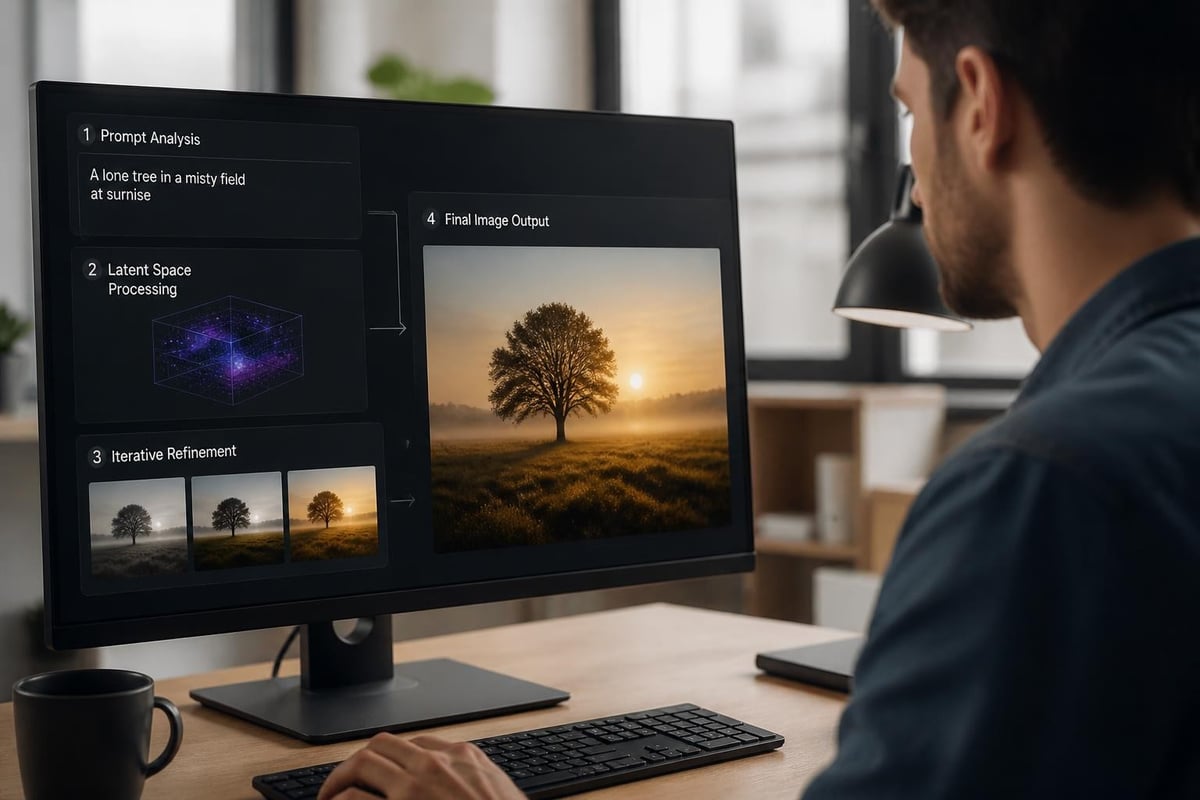
AI-generated photography has matured into a practical solution for numerous commercial applications. E-commerce businesses use AI photos for product visualization when physical photography proves impractical or expensive. Marketing teams generate custom imagery that precisely matches campaign requirements without coordinating photoshoots.
Product catalogs benefit significantly from AI-generated images. When selling configurable products with multiple color or style options, creating a photo from AI for each variation eliminates the need for extensive photography sessions. Background generation allows businesses to place products in diverse contexts without location shoots.
Marketing and advertising applications include:
Real estate and architecture firms use AI to visualize properties before construction completes. Interior designers generate room concepts with different furniture arrangements and color schemes. Travel companies create destination imagery for emerging locations or seasonal variations.
| Application | Primary Benefit | Typical Use Case |
|---|---|---|
| E-commerce | Cost reduction | Product variations |
| Marketing | Speed to market | Campaign assets |
| Real Estate | Pre-visualization | Development projects |
| Publishing | Custom illustration | Editorial content |
The professional services offered by removit complement AI-generated images by ensuring they meet technical specifications for web and print publishing across various channels.
Not every photo from AI meets professional standards immediately upon generation. Quality assessment requires understanding both technical metrics and aesthetic considerations. Resolution, artifact presence, anatomical accuracy, and contextual coherence all impact usability.
Resolution represents the first consideration. While AI generators can produce high-resolution outputs, upscaling from native resolution often introduces softness or artifacts. Professional applications typically require 300 DPI for print and optimized file sizes for web delivery.
Critical quality factors include:
Consistency across image sets poses particular challenges. When generating multiple photos for a cohesive campaign, variations in style, lighting, or color balance can undermine professional appearance. Establishing detailed prompt templates and generation parameters helps maintain visual coherence.
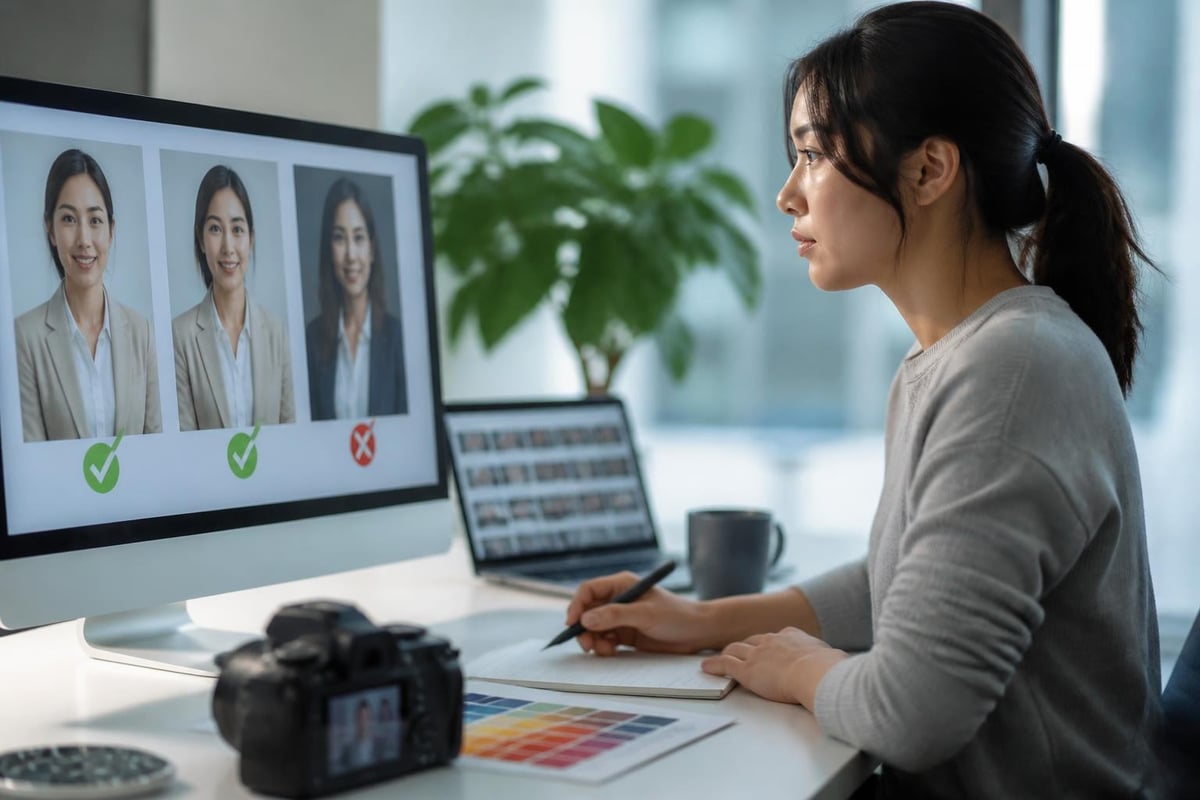
The legal landscape surrounding AI-generated imagery remains complex in 2026. Copyright eligibility for AI-generated images continues to evolve, with significant implications for businesses using such content commercially. Understanding current regulations protects companies from potential legal complications.
Current U.S. law maintains that a photo from AI created solely by artificial intelligence without substantial human creative input cannot be copyrighted. This creates potential risks when competitors could legally reproduce your AI-generated marketing materials. European jurisdictions apply different standards, adding complexity for international businesses.
Businesses should implement these protective strategies:
Training data transparency raises another concern. Research on deepfake attribution highlights how identifying the sources of AI-generated content remains challenging, creating potential liability if training data included copyrighted material without authorization.
Raw output from AI generators rarely meets all technical requirements for professional deployment. Post-processing and optimization transform a photo from AI into production-ready assets suitable for web publishing, print materials, and cross-channel campaigns.
Professional image optimization addresses multiple technical requirements simultaneously. File format conversion ensures compatibility across different platforms. Resolution adjustment balances quality with file size constraints. Color profile management maintains consistency across devices and printing processes.
Background removal represents a common optimization need. Many AI-generated photos include backgrounds that don't match intended use contexts. The upload functionality provided by specialized platforms automates background removal while preserving subject quality, enabling rapid integration into existing design templates.
| Optimization Task | Purpose | Technical Requirement |
|---|---|---|
| Format Conversion | Platform compatibility | WebP for web, TIFF for print |
| Resolution Scaling | Channel-specific sizing | 72 DPI web, 300 DPI print |
| Color Management | Cross-device consistency | sRGB web, CMYK print |
| Compression | Load time optimization | Quality 85-90 for web |
| Background Removal | Design flexibility | Clean alpha channel |
Batch processing capabilities become essential when managing large volumes of AI-generated content. Automating the import, configuration, and export of visuals maintains consistency while reducing manual effort. The quickstart documentation for automation workflows provides implementation guidance for businesses scaling their visual content operations.
As AI photo quality improves, distinguishing generated content from authentic photography becomes increasingly important. Businesses need verification capabilities both to ensure their own content meets authenticity standards and to assess imagery from external sources.
Scientific American outlines methods for identifying AI-generated photos, emphasizing the importance of systematic analysis. Common tells include repetitive patterns, inconsistent lighting physics, and anatomical impossibilities, though these become less reliable as AI systems improve.
Visual inspection techniques:
Metadata analysis provides another verification layer. Authentic photos from cameras contain EXIF data including camera model, settings, and timestamps. A photo from AI typically lacks this metadata or includes indicators of synthetic generation, though sophisticated actors can forge metadata.
Deutsche Welle's fact-checking guide emphasizes cross-referencing images through reverse image search and verifying source credibility, particularly important for businesses curating third-party visual content.
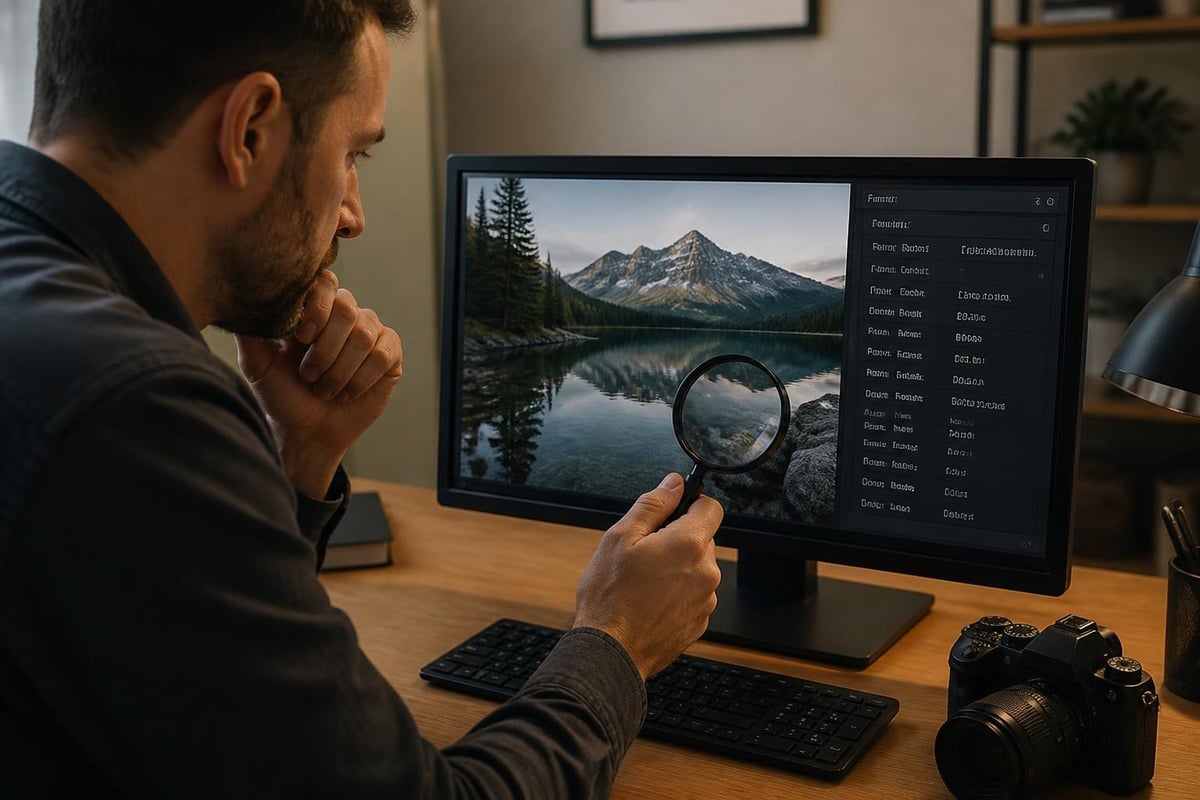
Successfully incorporating AI-generated photos requires seamless integration with existing creative and technical workflows. Businesses must balance the efficiency of AI generation with quality control processes that maintain brand standards.
Modern photo workflows combine multiple technologies and human touchpoints. AI generation handles initial content creation, optimization platforms ensure technical compliance, and human review validates brand alignment. Each component must communicate effectively to maintain efficiency.
A typical enterprise workflow includes these stages:
The API documentation for automated workflows demonstrates how businesses can programmatically integrate image processing into larger content management systems, ensuring every photo from AI receives consistent optimization treatment.
Maintaining visual consistency across web, print, email, and social channels presents particular challenges with AI-generated content. Each channel demands different technical specifications while requiring cohesive brand presentation.
Web channels prioritize load speed, requiring aggressive compression and modern formats like WebP. Print applications demand higher resolution and specific color profiles. Social platforms impose dimension and file size restrictions. A single photo from AI must be adapted to meet all these requirements without degrading quality or compromising brand identity.
Financial justification for AI photo adoption requires comprehensive cost comparison with traditional photography. While per-image costs may appear lower, hidden expenses and quality trade-offs impact true return on investment.
Traditional product photography involves photographer fees, studio rental, equipment, model costs, and post-production editing. A single professional product shoot might cost $2,000-5,000 for a full day generating 50-100 usable images, or approximately $20-100 per final photo.
AI generation platforms charge varied pricing models:
| Cost Model | Typical Pricing | Best For |
|---|---|---|
| Per-image credits | $0.10-2.00 per photo | Occasional use |
| Monthly subscription | $30-100 for 500-2000 images | Regular production |
| Enterprise licensing | Custom pricing | High volume |
| API usage | $0.05-0.50 per generation | Automated workflows |
However, comprehensive cost analysis must include post-generation optimization. The pricing for professional image processing services factors into total per-image costs, particularly when AI outputs require background removal, color correction, or format conversion.
Time investment in prompt engineering and quality control represents a significant hidden cost. Generating a satisfactory photo from AI might require 10-20 iterations with prompt refinement, consuming staff time. Failed generations that don't meet requirements represent wasted credits and effort.
Additional cost factors:
The break-even point typically occurs for businesses requiring high volumes of similar imagery where prompt templates can be reused. Companies producing 100+ product images monthly often see positive ROI within three months of implementation.
AI photo technology continues advancing rapidly, with several trends shaping business applications through 2026 and beyond. Understanding emerging capabilities helps businesses plan strategic investments and capability development.
Real-time generation speeds have improved dramatically, with some platforms producing usable results in under five seconds. This enables interactive workflows where designers iterate rapidly, testing multiple concepts before committing to final selections. As noted by AP News coverage of AI content challenges, distinguishing AI-generated content becomes increasingly difficult as quality improves.
Style consistency has emerged as a major development focus. Businesses can now train custom models on their existing photography to generate new images matching established brand aesthetics. A photo from AI can replicate lighting style, color grading, and compositional approaches from reference libraries.
Technology trends to watch:
Integration depth continues expanding, with specialized use cases demonstrating how AI generation connects to broader content management systems, e-commerce platforms, and marketing automation tools.
Deploying AI-generated photos commercially requires comprehensive risk management addressing legal, reputational, and operational concerns. Businesses must establish governance frameworks that protect against potential downsides while capturing efficiency benefits.
Content governance policies should explicitly address AI-generated imagery. Define approval workflows, usage restrictions, and disclosure requirements. Some industries or clients may prohibit AI photos, requiring clear internal processes to prevent inappropriate use.
Risk mitigation checklist:
WIRED's investigation of exposed AI databases highlights privacy and security considerations when using cloud-based generation services. Businesses handling sensitive product information should evaluate data handling practices and consider on-premises or private cloud solutions.
Reputational risk emerges when AI photos fail to meet audience expectations or when disclosure policies create perception issues. Transparent communication about AI usage, combined with rigorous quality standards ensuring indistinguishable professional quality, minimizes these concerns.
AI-generated photography has matured into a viable business tool offering significant efficiency gains when deployed strategically with appropriate quality controls and optimization workflows. Whether you're producing hundreds of product images monthly or creating custom marketing visuals, integrating a photo from AI into professional workflows requires both technical infrastructure and governance frameworks. removit provides the optimization infrastructure businesses need to transform raw AI-generated photos into production-ready assets optimized for web and print channels, ensuring consistent quality across all customer touchpoints while reducing processing costs through automated workflows.
